Who Is Responsible for Water Pipes
Responsibility for water pipes changes hands at the water meter. Anyone asking who is responsible for water pipes at a Paddington address gets a short answer. Urban Utilities owns the street main and the meter, and you own the pipes running from the meter to your taps. A licensed plumber does the repairs on your side.
If we're late, $100 comes off your bill

- Licensed and InsuredEvery job done by a licensed plumber. QBCC No: 15024607
- Fixed Quote FirstFlat-rate pricing, agreed before any work starts
- Lifetime Labour WarrantyBacked by our Fix-It-or-It's-Free guarantee (T&Cs apply)
- $0 Call-Out FeesNo extra charge for nights, weekends or public holidays
The suburb counted 2,310 separate houses at the last census, most of them pre-1940 cottages. Many were re-plumbed in stages, so old galvanised lengths still meet newer copper under the floors, and those mixed-metal joins are a common source of trouble.

The Water Meter Is the Dividing Line
Your pipes start at the water meter, and Urban Utilities maintains everything upstream of it. The utility owns the public main in the street and the pipe that feeds the meter, so a leak in either stretch is the utility's job, not yours.
At a typical house here, the meter lives in a lidded box sunk into the verge, the council strip outside your front boundary. Houses usually run a 20 mm or 25 mm meter. Everything downstream, from that box onto your land and into the cottage, is yours to maintain.
Which Pipe Belongs to Whom Along the Line
Ownership splits into three stretches between the street main and your kitchen tap.
The public main and the pipe up to the meter
Urban Utilities owns and maintains both.
The meter itself
also the utility's property, along with its valves and fittings.
Each pipe past the meter, out to the fixtures
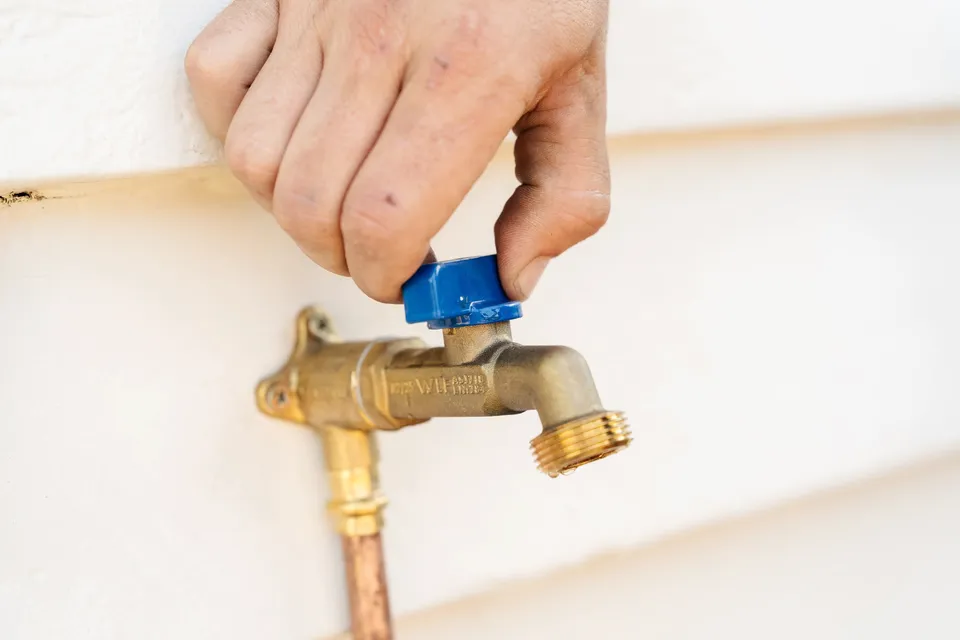
yours, including a garden tap at the end of the run.
One Brisbane variation matters on larger properties. Where a meter of 32 mm or more cannot be placed within two metres of the boundary, or cannot be reached freely, the utility may agree to put it inside the building. The pipework between the utility's service and that meter then belongs to you, while the meter itself stays the utility's.
A leak between the boundary and an inside meter is your job to repair promptly. An ordinary cottage in Elizabeth Street has a small verge meter, and there the line stays simple: the box out the front is theirs, the rest is yours.

What the Utility Does and Does Not Cover
You carry the loss when a hidden leak sits on the house side of the meter. The owner holds the primary duty for leaks on the property, and you pay for every drop the meter registers, leaks included. Any relief comes only under the utility's concealed leak allowance rules.
A concealed leak, in the utility's terms, is water escaping underground where no dampness or soaking shows at the surface. Water under a path, a slab or a cottage floor counts. What the utility does not cover is everything else: other leak types, and the plumbing repair costs of any leak.
Old supply lines here make that worth knowing. A corroded joint between galvanised and copper under the boards can weep for months with nothing visible above, which is exactly the concealed kind.
Duties That Come With Owning the Pipes
Any leak or blockage in the pipes past the meter is yours to investigate and fix. Under Queensland's plumbing regulations, repairing a broken pipe counts as minor work: a licensee carries it out, and neither a permit nor a Form 4 applies.
Three further duties apply in the Urban Utilities area:
Keep the meter reachable
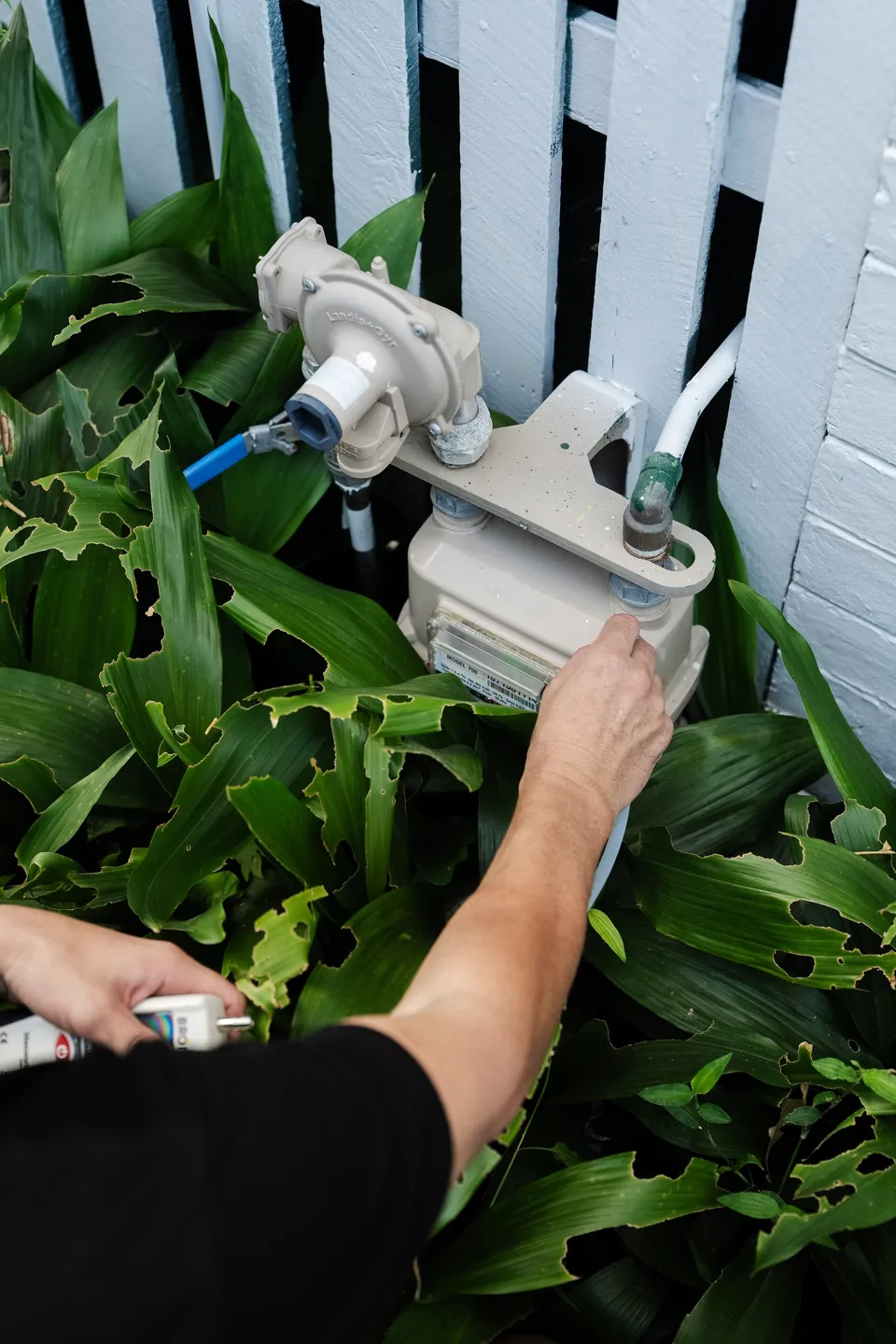
The utility needs to reach the box to read, service or swap the meter, so no concrete over it and no plants or raised garden beds hiding it.
Get a Water Approval first
Always ask Urban Utilities for a Water Approval before fitting, altering or removing a meter or the pipework around it.
Ask before building over a pipe
Brisbane City Council will not advise on these requests, because the pipes belong to Urban Utilities; check with the utility before building over or near one.
None of this means digging yourself. Reading your own meter to check for leaks is fine, but repairs belong with a licensed plumber, and the meter and its valves stay the utility's to touch.
When to Call a Plumber
Ring a plumber when water keeps vanishing with every tap shut off, a bill climbs for no clear reason, or damp spreads under a floor. A mixed-metal joint under the boards can fail without warning and pour water into the under-floor space before anyone sees it, so a suspected hidden leak is not a wait-and-see job. Our page on leak detection walks through how one is found.
Blockages sit on your side too. House drains here were hooked to the sewer during the early-1960s program, and the joints near the boundary trap are where roots usually get in first. That is owner's pipework, and it needs a licensed hand.
Pipe Ownership Questions From Paddington
Call (07) 3523 6484Is the water meter at a Paddington home mine?
No, the meter belongs to Urban Utilities. The utility owns every meter fitted and accepted under its metering guideline, and it services and renews them over time. Your own run of pipe begins on the downstream side of the box.
Is a leak under my driveway my responsibility?
Yes, when it sits on your side of the meter. Every pipe and fitting from the box onto your land belongs to the owner, a hidden leak included, and the leak detection page explains how a plumber traces one.
Does the meter box have to stay clear of garden beds?
Yes, the box must stay easy to reach. Concrete over it, plants around it or a raised garden bed are not acceptable, and a ladder or tight space does not count as adequate access.
Who pays for water lost to a leak in Paddington?
The owner. You pay for every drop the meter registers, leaks included, and the loss sits with you on the house side. Relief exists only under the utility's concealed leak allowance rules, which the leak detection page sets out.

Talk to Us About Your PipesWe'll call you back.
Book on (07) 3523 6484 for plumbing anywhere in Paddington. We're available 24/7, there's no extra charge for nights, weekends or public holidays, and every job comes with $0 call-out fees.
To claim your $0 call-out fee, call (07) 3523 6484 today.